Jabari Brown
Jabari.kibwebrown@gmail.com
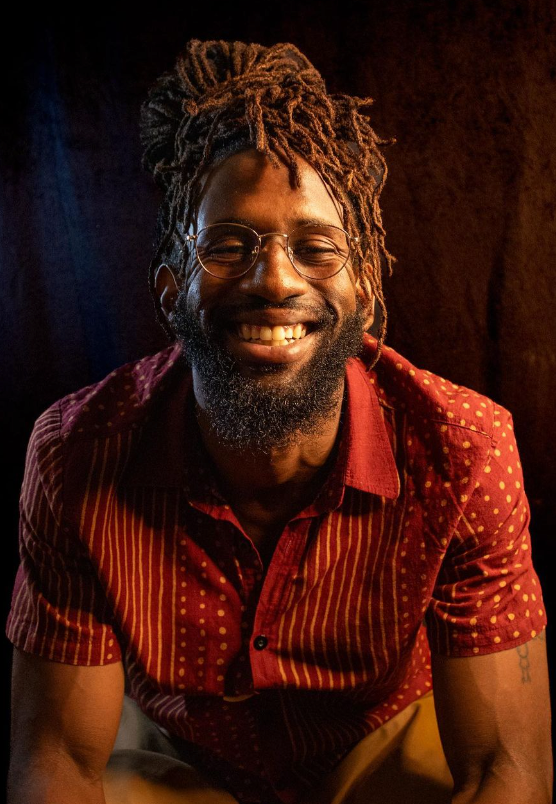
I'm a Jamaican/Guyanese animator based in Trinidad and Tobago. I've been obsessed with animation since I was 10, starting with stop-motion using a webcam in my parents' office.
Right now I'm deep into experimental animation. I think of visual style as a language, and I'm interested in how visual systems work as communication. What gets me excited is the challenge of pushing a style across a whole project consistently and experimentally. Understanding what each piece needs visually, then figuring out how to get there. It's about learning the grammar of whatever world I'm trying to build.
Growing up between three Caribbean countries meant growing up with a lot of stories. Colors, shapes, visual culture packed with meaning. I want to make work that gives that representation back. Worlds where people like me can actually see themselves. I want to take the narratives we carry in oral tradition and bring them to life visually.
The Caribbean has this incredible culture of storytelling. Everyone does it. Everyone has their own way of doing it. That's not sentimental, that's a real resource. And I think animation can help amplify that, especially back home where we're still building those industries and infrastructure.
I finished my MFA at SCAD Atlanta, and teaching has become a real part of how I work. I teach stop-motion, experimental, and computer animation to students from grades 1 through adult learners. Whether it's designing curriculum, one-on-one tutoring, or teaching in schools, I'm interested in creating space for people to experiment and find their own visual language.
There's something about working through problems alongside someone else that sharpens your own thinking. It forces you to articulate why something works, to break down concepts you've internalized, to stay curious about fundamentals. Teaching keeps my practice honest.
Right now, I'm focused on pushing my work forward while mentoring the next generation of animators. Both feel equally important because they're feeding each other. Every student I work with teaches me something about how to communicate visually, how to solve problems differently, what actually matters when you strip away the noise. And the experimental work I'm making pushes me to think deeper about visual language and how form carries meaning, which directly shapes how I teach and what I value in my students' work. It's a cycle that's expanding what I'm capable of as an artist.